Čeština
 English

In October, the Dubai short-term rentals we manage sold a night for 19% more on average than in September, and roughly a fifth more new bookings were made. Occupancy fell at the same time, half of it because more nights became available in the portfolio. This is the third instalment of our monthly overview, covering October 2026, with the data set up exactly as in August and September, so the comparison describes reality rather than a change in method.
We are talking about short-term accommodation priced per night (holiday homes), not annual leases. How the two regimes differ is covered in our comparison of short-term and long-term rentals. You will find the previous instalments under September 2026 in numbers and August 2026 in numbers; the August one also explains the individual metrics.
Table of Contents
October 2026 in numbers
| Metric | October 2026 | September 2026 | Change |
|---|---|---|---|
| Average nightly rate | 307.24 AED | 258.01 AED | +19.1% |
| Portfolio occupancy | 75.81% | 81.90% | −6.09 percentage points |
| Nights sold | 2,444 | 2,457 | −0.5% |
| Nights sold per day | 78.8 | 81.9 | −3.7% |
| Available units per day | 104 | 100 | +4% |
| New bookings created | 312 | 253 | roughly +20% |
How did CzechIn perform in October?
Better on price again, weaker on occupancy. The average nightly rate rose by 19.1% to 307.24 AED, up 47% in total since August. 312 new bookings were created, roughly a fifth more than in September. Occupancy fell from 81.90% to 75.81%.
The fall in occupancy has two causes of roughly equal size. The first is more available nights: the portfolio had 104 units available per day on average in October, against 100 in September. The second is 3.7% fewer nights sold per day, 78.8 against 81.9. What matters for owners is the product of the two: revenue per available night, the measure hotels use (RevPAR, the average rate multiplied by occupancy), rose by roughly 10%. The higher price more than offset the lower utilisation.
Unlike September, which was still picking up speed, October was even. Revenue in two-day blocks stayed within a narrow band: the strongest block (25 and 26 October) was only 15.7% above the weakest (17 and 18 October), and the second half of the month beat the first by 2.5%. After the September ramp-up, revenue held at the higher level all month.

How did October answer the three questions from September?
In the September instalment we promised to watch three things. The answers:
- Will the rise in the nightly rate last? Yes, the rate rose by a further 19.1%, from 258.01 AED to 307.24 AED. The season is still showing mainly in the price.
- How will the number of available nights develop? It increased. After the September dip to 100 units a day, there were 104 in October. That is why occupancy fell more than nights sold.
- Will direct bookings hold their share among newly created bookings too? Yes, and it grew. Direct bookings made up 12.8% of the bookings created in October, against 8.3% in September. Their share of nights sold rose from 13.8% to 15.6%.
Where our guests came from
| Booking channel | August 2026 | September 2026 | October 2026 |
|---|---|---|---|
| Airbnb | 73.01% | 64.22% | 61.46% |
| Booking.com | 19.72% | 20.23% | 20.50% |
| Direct bookings | 6.88% | 13.84% | 15.63% |
| Our own booking website | 0.39% | 0.49% | 1.31% |
| Partner channels | 0% | 0% | 1.06% |
| Expedia | 0% | 1.22% | 0.04% |
Airbnb remains the main channel, but its share of nights has now fallen for the second month in a row, by almost twelve percentage points since August. The space is being taken by direct bookings and, to a lesser extent, by our own booking website, which passed one percent for the first time. Booking.com holds about a fifth of nights and almost a quarter of new bookings. Expedia, which brought 30 nights in September, nearly disappeared in October.
For owners this is good news for two reasons. A direct booking carries no portal commission, so the owner keeps a larger share of it. And a portfolio that does not depend on a single platform copes better with a change in its algorithm or terms. That is exactly why we manage distribution actively.
How is Dubai tourism doing?
Still clearly below last year, although it has been recovering since spring. The Department of Economy and Tourism (DET) had not published monthly figures newer than August, which we covered in the September instalment, by early November. From January to August 2026, Dubai welcomed 6.97 million international overnight visitors according to DET, roughly 44% fewer than in the same period last year according to CBRE.
Hotels fared similarly. According to CoStar data quoted by CBRE in its quarterly review, Dubai hotels had occupancy 26 percentage points lower than last year from January to September 2026, an average room rate 10% lower and revenue per room 33% lower. According to CBRE, Dubai was the most affected market in the Emirates, although the same review says a recovery is under way.
Our own figures show it differently. The nightly rate in our portfolio has risen by 47% since August, but that is the start of the season against summer, not a comparison with last year. We do not have a year-on-year comparison in this overview yet, as we have kept data with the same settings since August 2026. In the September instalment, Jiří Chlebek said the portfolio had not quite reached last September's level.
How did the Dubai property market perform in the third quarter of 2026?
Clearly fewer homes were sold than last year, and according to most indices prices stalled or dipped slightly. The Dubai Land Department (DLD) had not published official quarterly totals by early November, so we rely on analyses by consultancies and agencies based on DLD data. They agree on the number of sales, but on prices and rents they do not even agree on the direction.
- Sales: according to CBRE, 35,665 residential properties were sold in the third quarter, 37% fewer than a year earlier and 3% fewer than in the second quarter. Cavendish Maxwell counts about 34,000 sales worth 72.6 billion AED, 47% less than last year. Roughly 72% of purchases were off-plan homes still under construction.
- Prices: the ValuStrat index was 4.5% below last year in September, 6.4% for apartments. CBRE reports a year-on-year fall of about 1% and Cavendish Maxwell 2.2%. The agency betterhomes, on the other hand, reports a year-on-year rise of 2.2% for apartments. Each source measures differently (valuation index, average or median of sales), so we do not merge the figures.
- Annual rents: according to CBRE they fell by 7% year on year. According to Cavendish Maxwell they are 5.5% higher than last year, but growth has slowed from 11.5% and in the third quarter 21.4% of rental contracts ended below the previous rent. betterhomes sees a 3.8% fall for apartments from June to September.
For owners of short-term rentals these are neighbouring markets, not the same market: property prices and annual rents do not follow the same numbers as accommodation priced per night. Anyone considering a switch from short-term letting to an annual lease, however, should expect that annual rents have stopped rising at the pace of recent years. How to calculate the yield of a specific apartment is covered in our article on gross and net rental yield.
What is new in our offer and on the website
New project: KORE by Imtiaz in Dubailand
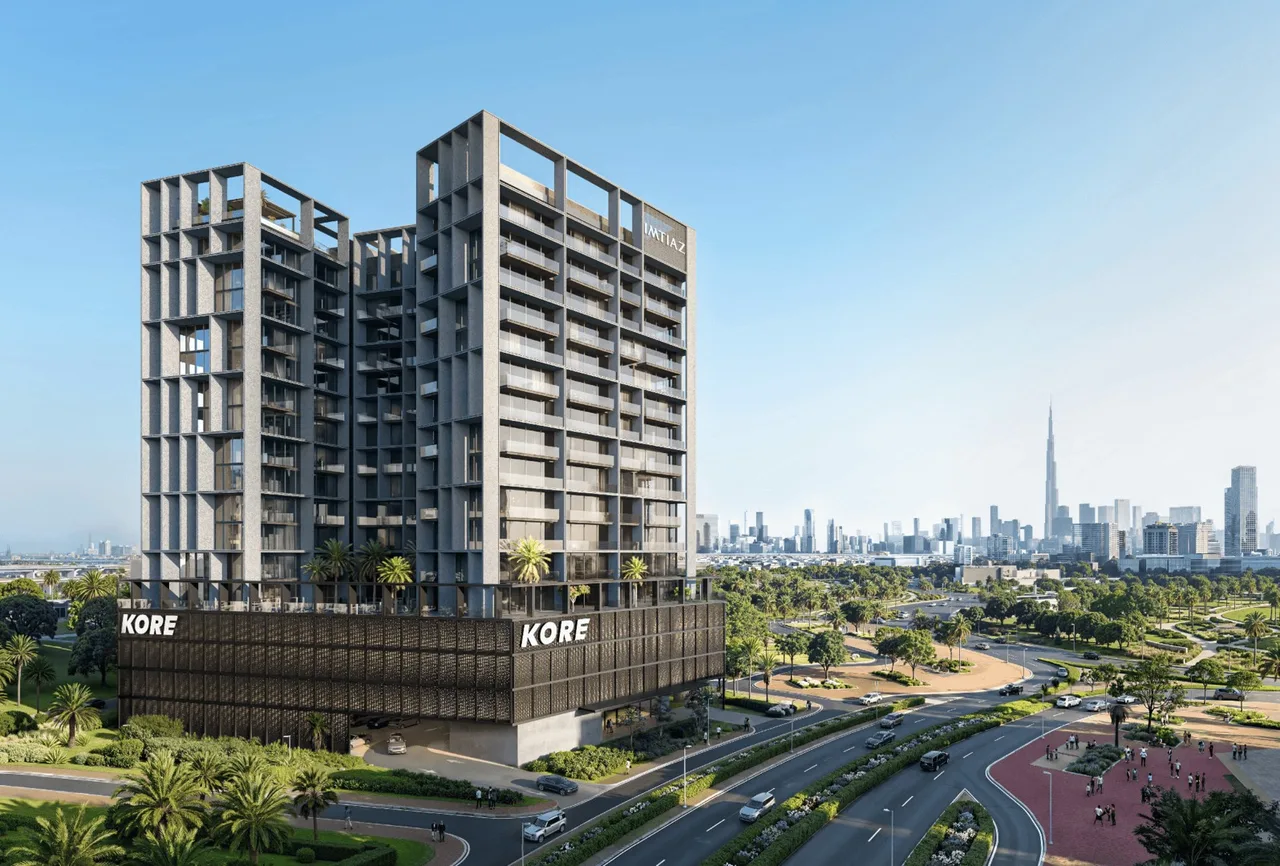
Since 8 October we have been offering KORE by Imtiaz in Dubailand, a new project by Imtiaz Developments built around a healthy lifestyle: a gym with Technogym equipment, a padel court, rooftop pools and a wellness area focused on recovery. It offers studios and one and two-bedroom apartments of roughly 38 to 131 m². According to the developer's starting prices, studios start at 679,000 AED and one-bedroom apartments at 1,100,000 AED. Handover is planned for the fourth quarter of 2028. Ask us about it, or browse our current projects in Dubai.
On the website
- The blog in English: on 13 October all nine articles published so far came out in English, and every new article has appeared in both languages since then. The Dubai Marina and Downtown Dubai locations also got English pages.
- Four new articles: September in numbers, how to spell Abu Dhabi in Czech with a poll, what to see in Abu Dhabi and living in Abu Dhabi.
- Apartments that cannot be booked: instead of the booking button, the website now shows a notice and offers available apartments in the same location.
- Contacts and FAQ: the Contact page now lists the office with its landline, and the FAQ has a new answer on whether buying property opens the way to a residence visa.
Portfolio as of 31 October
We have 99 units in our reservation system, the same as at the end of September. You can browse them in our rental offers.
What guests wrote about us in October
On Google, CzechIn.ae is rated 4.9 out of 5 from 299 reviews; on Airbnb it holds Superhost status and 4.79 out of 5 from 2,010 ratings. Of the ratings guests wrote on Airbnb in October, roughly eight in ten were five stars:
- Guests most often praise cleanliness and the team's quick responses. Guests from Dubai appreciated that the team was available day and night whenever they needed something.
- One Google review from late October praises an apartment in the Azizi Riviera residence: spotless, with a pool and gym, and a helpful and responsive team.
What to watch in the November instalment
- Whether the nightly rate keeps rising. November opens the main season; last year, according to the Department of Economy and Tourism, December was the strongest month.
- Whether occupancy returns above 80%. In October it was pulled down mainly by a larger supply of free nights.
- Whether direct bookings keep taking share from Airbnb, both in nights and among newly created bookings.
The November instalment will come out on Wednesday 2 December.
Where the figures come from
From our reporting in the Hostaway system for 1 to 31 October 2026, with the same settings as in August and September: all units, all channels and nights assigned to the days of the stay. October's new bookings come directly from the export. September's were counted from the list of bookings, which comes out a few percent lower (for August 180 against 183 in the export), so we give the change in rounded terms. Available units per day and revenue per available night were calculated from occupancy, nights sold and the rate. We give revenue only in percentages. These are figures for the portfolio as a whole, not for a single unit. What management involves is covered in our article on managing a Dubai property remotely.
Do you own an apartment in Dubai? We will calculate the occupancy and nightly rate your unit can realistically reach and what the main season means for it. Start on our property management page, or see what one of our units looks like, for example a studio in the Azizi Riviera residence.
Still choosing a property? Browse our projects in Dubai and we will tell you which type of unit pays off best in short-term rental.
Frequently asked questions
What was short-term rental occupancy in Dubai in October 2026?
The portfolio managed by CzechIn.ae had 75.81% occupancy in October 2026 with 2,444 nights sold, 6.09 percentage points less than in September. Roughly half of the fall was caused by more available nights in the portfolio, the other half by 3.7% fewer nights sold per day.
How much did a night in a Dubai short-term rental cost in October 2026?
The average rate in the managed portfolio was 307.24 AED, 19.1% more than in September and 47% more than in August. It is not revenue divided by the number of nights, which also includes cleaning. It is an average across studios and larger apartments and across all locations, so it says nothing about a specific apartment.
Why did occupancy fall while the nightly rate is rising?
Occupancy is the ratio of nights sold to nights available. In October more nights were available, 104 units a day on average against 100 in September, and slightly fewer nights were sold per day. Revenue per available night, the rate times occupancy, still rose by roughly 10% because the price grew faster.
How many bookings were created in October and how many were direct?
312 new bookings were created in October, roughly a fifth more than in September. Direct bookings without a portal made up 12.8% of them, against 8.3% in September, and 15.6% of nights sold. Airbnb brought 61% of new bookings and Booking.com 24%.
How is tourism in Dubai developing in 2026?
According to the Department of Economy and Tourism, Dubai welcomed 6.97 million international visitors from January to August 2026, roughly 44% fewer than last year according to CBRE. Numbers have been rising since March, and hotel occupancy reached 66% in August against 36% in March. DET had not published newer figures by early November.
How did the Dubai property market perform in the third quarter of 2026?
There were clearly fewer sales than last year, according to CBRE 35,665 residential sales, 37% fewer. According to most indices prices stalled or dipped slightly: ValuStrat reports −4.5% year on year, CBRE −1%. The agency betterhomes, by contrast, sees apartment prices up 2.2%. The DLD has not yet published official totals.
When will the next instalment come out?
The next instalment, for November 2026, will come out on Wednesday 2 December. The overview is published on the first Wednesday of each month for the previous month, using the same method so that the figures can be compared. November opens the main tourist season, so we will mainly watch the nightly rate and occupancy.