Čeština
 English

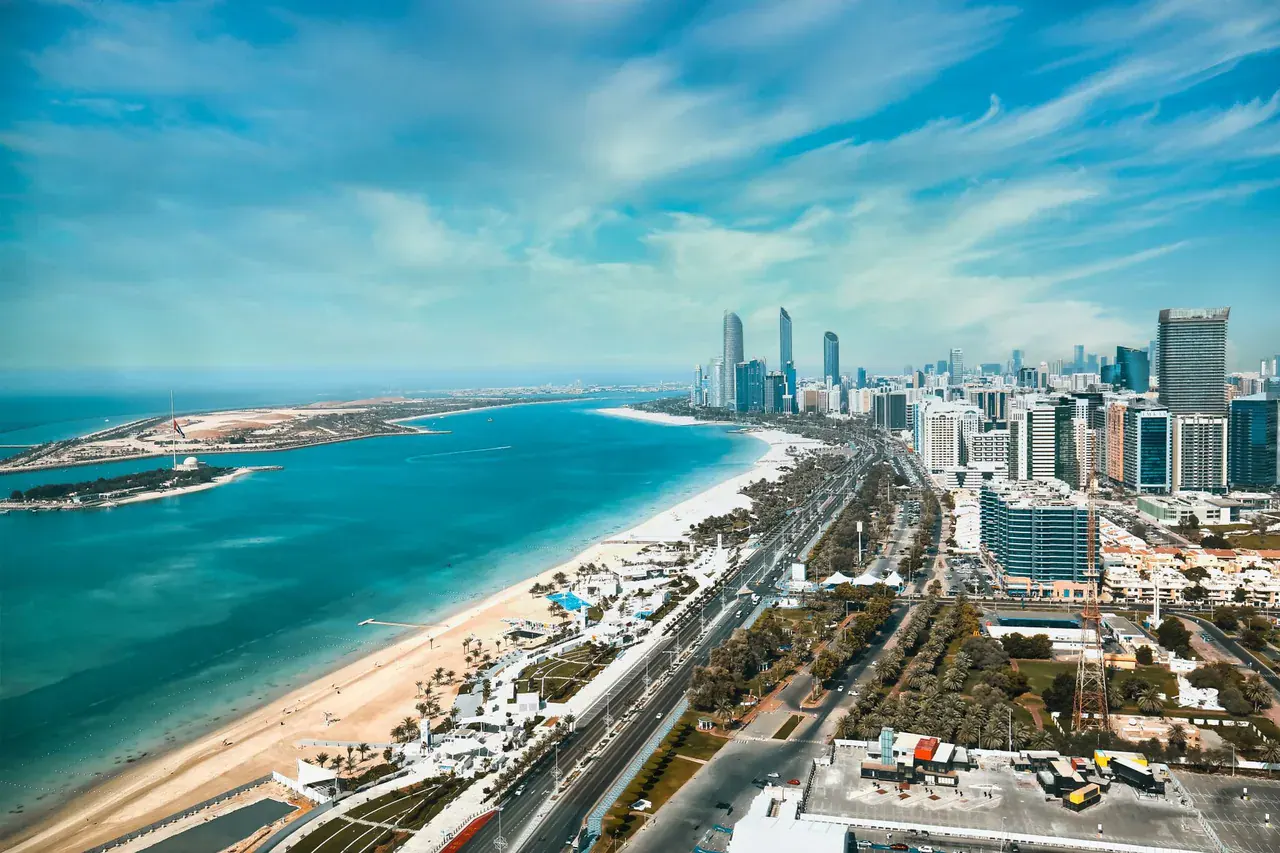
Living in Abu Dhabi runs at a slower pace than in Dubai. The capital of the United Arab Emirates is calmer and more spread out, but it has no metro, its airport handles almost three times fewer passengers than Dubai's, and its neighbourhoods are scattered across islands and the mainland, so you get around by car. From the centre it is about 77 minutes' drive to Dubai Marina without traffic, and since 30 September 2026 a train runs here from Dubai too. Yet the property market is growing faster than Dubai's: the value of transactions rose by 44% in 2025 according to ADREC, compared with 20% in Dubai according to the Dubai Land Department, and in the first half of 2026 transactions worth 117 billion AED went through, 112% more than a year earlier, according to the ADREC half-year report.
This guide is part of our series on locations and reads differently from our travel tips. What to see in Abu Dhabi in a day, what tickets cost and how to get there by train is covered in our Abu Dhabi day trip guide. Here we describe Abu Dhabi as a place to live: how it came about, what its neighbourhoods are like, what you will find there and what is missing, how far things are and how it differs from Dubai. Our office is in Dubai and we offer five off-plan projects for sale in Abu Dhabi, so at the end we also look at prices, rents and what is being built. Rents throughout are annual rents from long-term rental listings, not nightly rates.
Table of Contents
How did Abu Dhabi come about?
From a settlement on an island where the Bani Yas tribe found drinking water in 1761. That is how the Abu Dhabi Residents Office describes the city's beginnings, and Visit Abu Dhabi also writes about a well found around 1761. According to the UAE government portal, the ruling Al Nahyan family comes from the Al Bu Falah branch of the Bani Yas, which originally lived in the Liwa oasis and moved its seat to the island at the end of the 18th century.
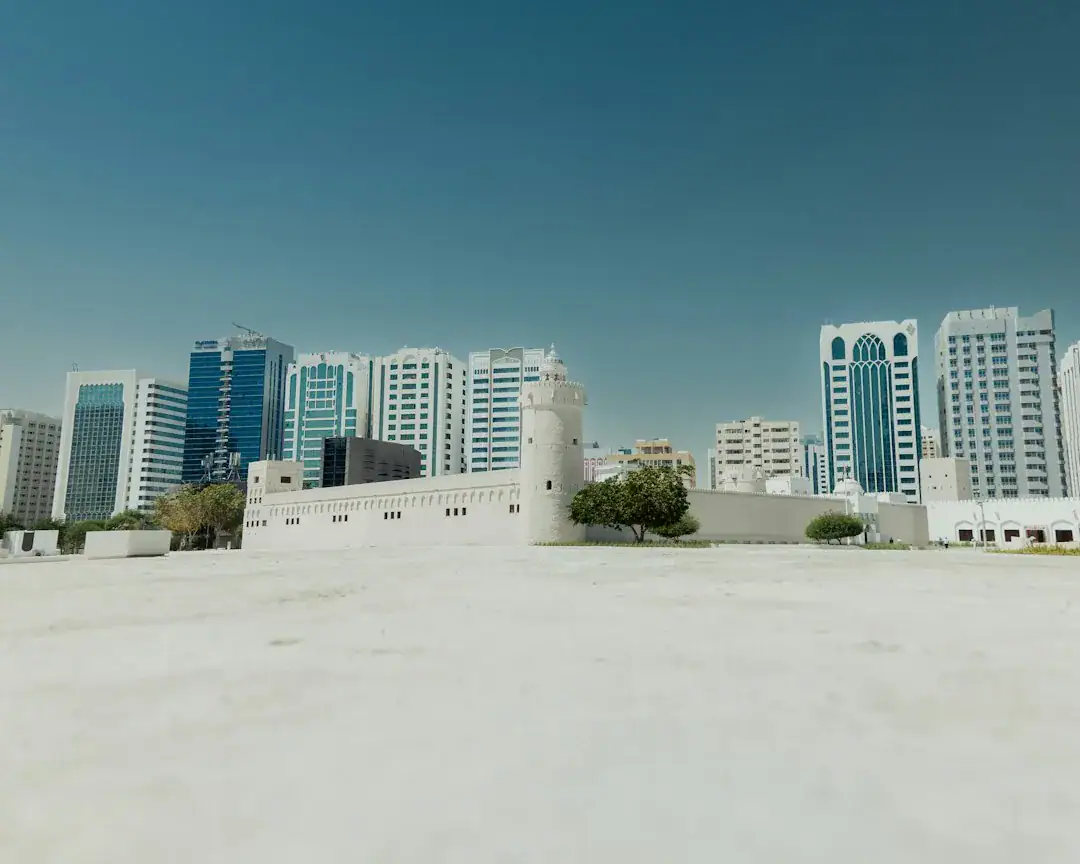
The oldest building in the city is the Qasr Al Hosn fort. According to the fort's official website, its watchtower dates from around the 1790s; a fort grew up around it, which the Al Nahyan family lived in for almost two hundred years, and a palace followed in the 1940s. Since 2018, after more than eleven years of restoration, it has been a museum, and its white walls now stand among the towers of the city centre.
Pearls kept the town alive. Around 1901, according to the Abu Dhabi Residents Office, the Gulf accounted for 90% of the world's pearl trade, but in the late 1920s and 1930s cheaper Japanese cultured pearls and the Great Depression destroyed the trade, as The National recalls. Oil changed everything: ADNOC dates the first oil discovery to 1958, and according to The National it was the offshore Umm Shaif field near Das Island, from where the first oil tanker sailed on 4 July 1962.
Modern Abu Dhabi is the work of Sheikh Zayed bin Sultan Al Nahyan, who became ruler of the emirate on 6 August 1966, as Gulf News recalled on the sixtieth anniversary. When the United Arab Emirates was founded on 2 December 1971 and Sheikh Zayed became its first president, the UAE constitution made Abu Dhabi only the provisional capital; the federation was to build a new seat on the border with Dubai. That never happened, and a constitutional amendment of 2 December 1996 made Abu Dhabi the permanent capital.
What is Abu Dhabi like today?
Vast, wealthy and still largely built on oil. According to the UAE Ministry of Foreign Affairs, the emirate of Abu Dhabi covers 67,340 square kilometres, 84% of the country's land, and according to the government portal it has more than 200 islands. According to the Statistics Centre Abu Dhabi, 4,135,985 people lived here in 2024, about 2.8 million of them in the capital region, around a million in Al Ain and the rest in Al Dhafra. Dubai had 3,863,600 residents at the end of the same year, according to Dubai's statistics office.
The city has no single centre like Downtown Dubai. The historic core with the Corniche promenade and Qasr Al Hosn sits on an island linked to the mainland by bridges. New districts have grown up on other islands (Al Reem, Al Maryah, Saadiyat, Yas) and large residential areas on the mainland around the airport (Al Raha Beach, Khalifa City, Masdar City, Al Reef). You drive between them on motorways, and from one end to the other takes half an hour or more.
Work looks different too. According to the Statistics Centre Abu Dhabi, the oil sector made up 43.8% of the emirate's GDP in the first quarter of 2025, with other sectors accounting for the rest. The international financial centre ADGM on Al Maryah and Al Reem islands, with its own legal system based on English common law, is growing fast: according to Gulf News, 49,027 people worked there in the first half of 2026.
Which Abu Dhabi neighbourhoods are worth a look?
For foreigners, mainly those in investment zones. Only there can a foreigner buy an apartment, a house or land outright, land only since the 2019 amendment to the real estate ownership law. According to ADREC, there were fifty investment zones by mid-2026. The report does not name them and we have not found a complete current list; according to published decisions, a zone can be a whole district or a single plot with one project. In its half-year report ADREC counted roughly 72,000 homes in them in the Abu Dhabi region, most on Al Reem Island (27,500), followed by Al Raha, Yas Island and Saadiyat Island. Before choosing a specific unit, check the status of its plot; some zones also cap the share of foreign owners.
The centre and the Corniche
The oldest and densest part of the city. An eight-kilometre Corniche promenade runs along the sea with a cycle path, playgrounds and a lifeguarded Blue Flag beach, as Visit Abu Dhabi describes it. Behind it stand high-rise apartment blocks, offices, hotels and the Marina Mall, with Qasr Al Hosn a little further in. People live here in apartments from studios to large five-bedroom units. The downsides, according to Property Finder, are heavy traffic, especially at weekends, and parking in the shopping streets. The older centre is not among the investment zones on the official government list, so foreigners here tend to rent rather than own.
Al Reem Island and Al Maryah Island
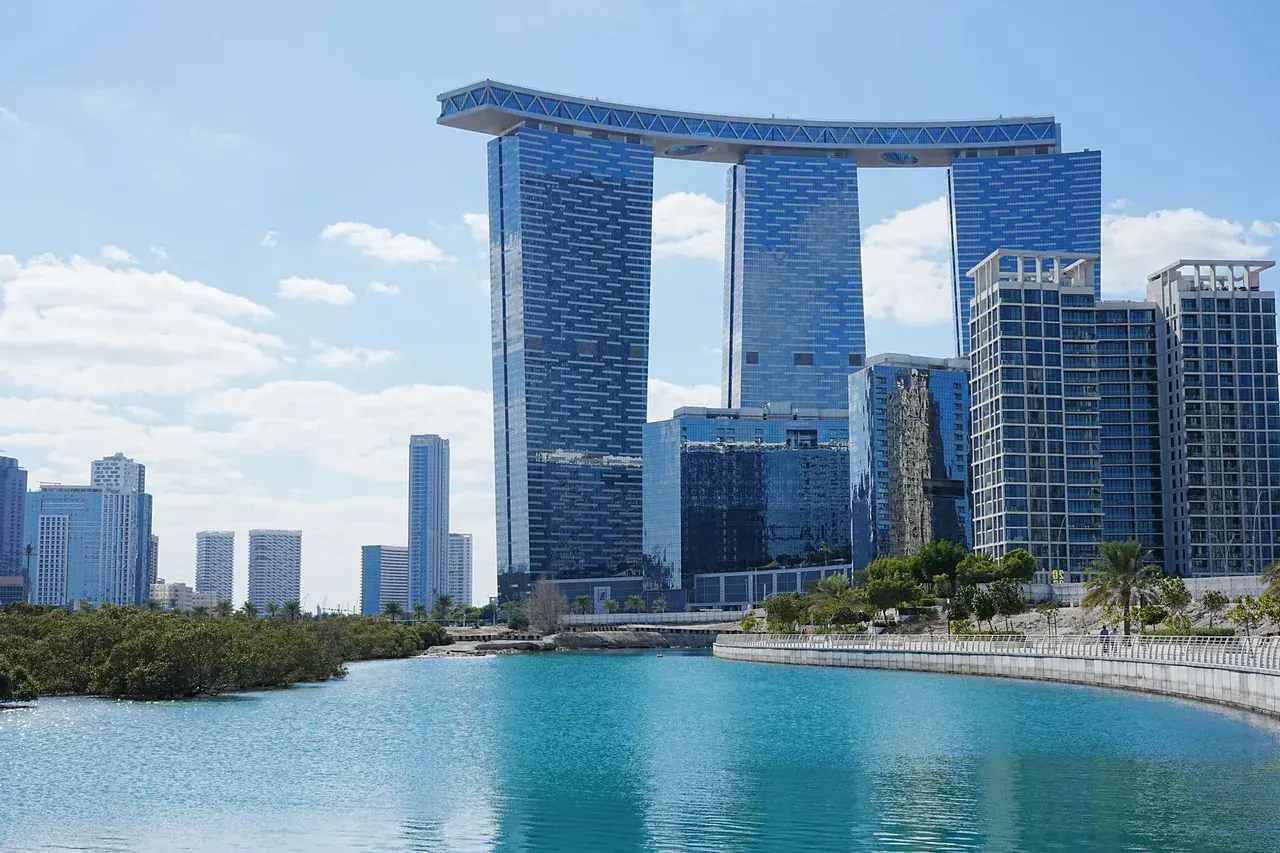
A modern city within the city, a few hundred metres from the centre. Al Reem is an island of mid-rise and high-rise apartment towers with Reem Mall, Repton School, Sorbonne University Abu Dhabi and Reem Central Park, according to the Bayut guide. According to Property Finder, families, young professionals and foreign residents live here. Neighbouring Al Maryah Island is the financial district with The Galleria mall and Cleveland Clinic Abu Dhabi, and ADGM operates on both islands.
What is missing: a bigger beach (there is a smaller beach by Reem Central Park, and according to Bayut the Corniche or Saadiyat is about 20 minutes by car), traffic jams on the bridges to the centre at rush hour, and constant construction. Public transport, according to Property Finder, is still developing. We have two projects on Al Reem Island, listed below.
Saadiyat Island
The cultural and beach district, and according to Bayut listings and ADREC registered sales the most expensive in Abu Dhabi (figures below). It is home to Louvre Abu Dhabi, Zayed National Museum, Natural History Museum Abu Dhabi and teamLab Phenomena, and Guggenheim Abu Dhabi opens here on 11 December 2026, as Khaleej Times reported citing the emirate's Department of Culture and Tourism. People live in villas, townhouses and low-rise apartment buildings, and there are schools such as Cranleigh Abu Dhabi and the American Community School, says Bayut. The downsides: high prices, no getting around without a car, and construction still going on in parts of the island.
Yas Island
The entertainment island next to the airport. Ferrari World, Warner Bros. World, Yas Waterworld, the Yas Marina Circuit Formula 1 track and Yas Mall, plus residential communities such as West Yas, Yas Acres and Ansam with apartments and villas, as Bayut describes it. According to Bayut, families with children are well served here too, and many developments offer resort-style amenities. And the island keeps changing: in May 2025 Disney and Miral announced a Disney theme park here without setting an opening date, and according to the Abu Dhabi Media Office a Sphere entertainment venue for up to 20,000 people is due to be built by the end of 2029, between Yas Mall and SeaWorld. The downsides according to Bayut: the centre is about 30 minutes away and you need a car.
Al Raha Beach, Khalifa City and Masdar City
The mainland by the airport, calmer and more suburban. Al Raha Beach is a waterfront community by developer Aldar along the E10 motorway, with Al Bandar, Al Muneera and Al Zeina, offering high-rise apartments, townhouses, villas and private beaches, says Bayut, which lists aircraft noise and congestion at the exits among the downsides. Neighbouring Khalifa City is a suburb with villas, international schools and NMC Royal Hospital. Masdar City is a sustainable district and economic zone that is still being completed and, according to Bayut, home to the headquarters of the International Renewable Energy Agency (IRENA); according to Masdar, its buildings use 40% less energy and water than comparable ones. In all three you need a car. Al Raha Beach and Masdar City are investment zones; Khalifa City is not on the published lists, so foreigners here are more likely to rent than buy.
Hudayriyat Island
A new district on an island right next to the centre. Under a plan the government unveiled in June 2023, reported by The National, developer Modon is building a district of more than 51 million square metres with 16 kilometres of beaches, the Surf Abu Dhabi wave park, a velodrome and 220 kilometres of cycle paths. Today the island is mainly for sport and leisure, most of the housing is still being built, and according to Modon's press releases new phases sell out within days.
Al Bahia and Sobha City
An outlying mainland district by the roads to Dubai, north of Yas Island and the airport. It is dominated by Emirati-style villas and newer apartment buildings, with Emirates Park Zoo and local schools, and buses run infrequently, according to the Bayut guide. This is where Sobha Realty announced Sobha City in April 2026, a new waterfront community of 38 million square feet with a promenade, a marina and schools, as Gulf News reported. According to the developer's brochure, it is 13 minutes to Yas Mall and 14 minutes to the airport. We offer three projects in Sobha City, but the district is only just starting and will be a building site until it is finished.
What does Abu Dhabi lack?
A metro, nightlife and a big airport. Abu Dhabi has no metro, and a tram from the airport across Yas Island to Al Raha is still being prepared, with service expected by 2030 according to Gulf News. You get around by car, taxi or bus. On the bridges to the island, the Darb toll costs 4 AED per crossing at peak times, as The National explained, and since 4 May 2026 two new gates charge around the clock, according to the Abu Dhabi Media Office; the Ghantoot gate is on the road to Dubai.
Zayed International Airport handled 32.5 million passengers in 2025 according to Abu Dhabi Airports, while Dubai's DXB handled 95.2 million according to the Dubai Media Office, so you will find more direct routes in Dubai. As for nightlife, the Property Finder comparison finds Dubai livelier and describes Abu Dhabi as a city with a calmer, more deliberate pace.
What is there to see in Abu Dhabi?
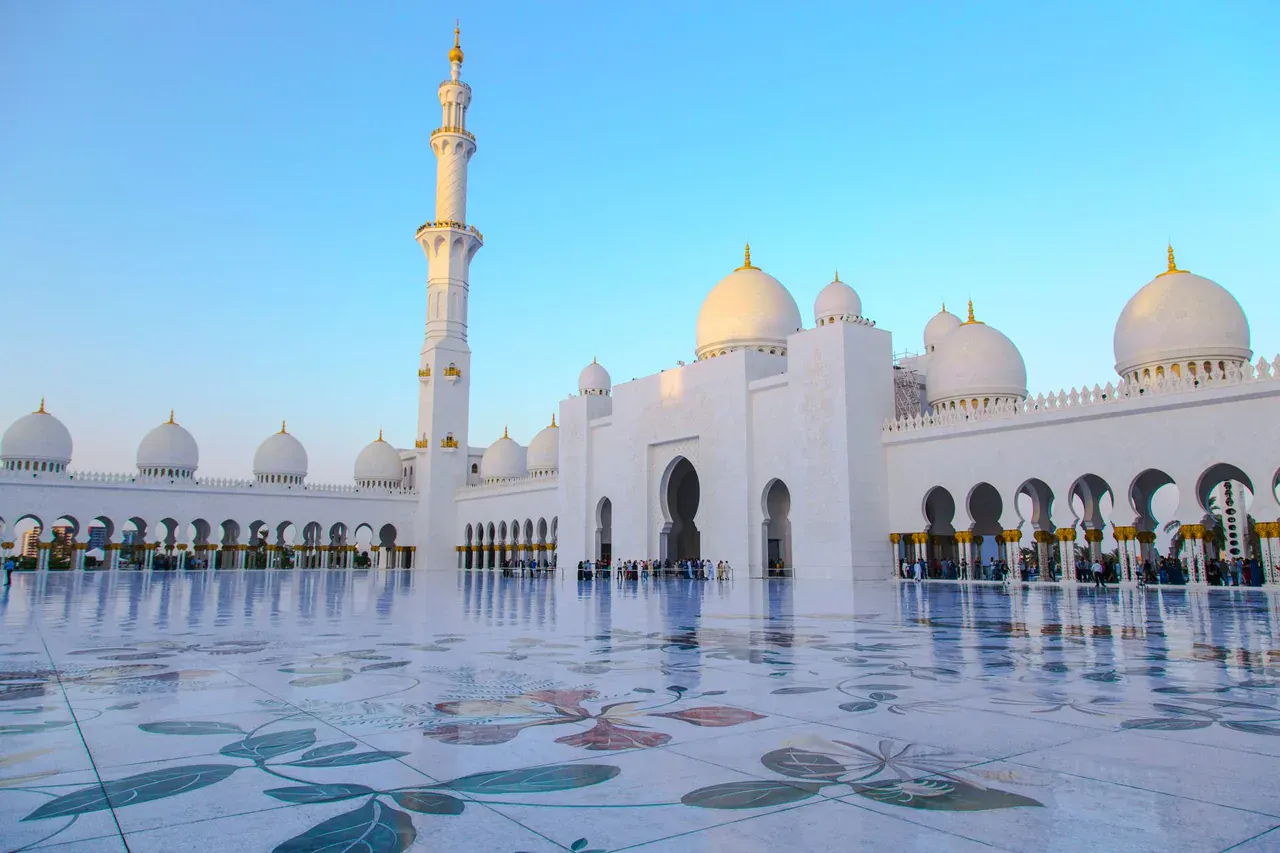
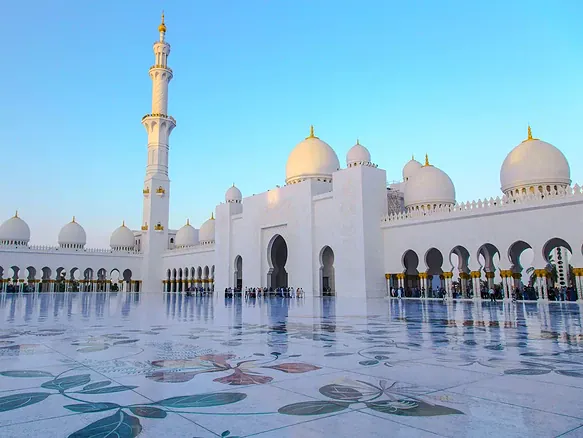
Sheikh Zayed Grand Mosque, the museums on Saadiyat Island, the Qasr Al Watan presidential palace, the Corniche promenade, the theme parks on Yas Island and the mangroves. We checked ticket prices, opening hours, the mosque dress code and two one-day routes as of 16 October 2026 in our Abu Dhabi day trip guide, so we will not repeat them here. Residents tend to value the everyday things tourists do not see: public beaches on the Corniche and Saadiyat, parks and waterfront cycle paths, and the fact that most of it is within half an hour's drive of home.
How far is it within Abu Dhabi and to Dubai?
Most Abu Dhabi neighbourhoods are within half an hour's drive of the centre, Dubai Marina is an hour and a quarter and Downtown Dubai an hour and a half without traffic. We calculated the distances ourselves from Qasr Al Hosn in the historic centre; driving times are without traffic and match the Bayut and Property Finder guides, which give 20 to 30 minutes from Yas Island to the centre.
| Destination | Straight line | By road | By car without traffic |
|---|---|---|---|
| Al Maryah Island, The Galleria | 4.0 km | 4.6 km | 6 minutes |
| Al Reem Island, Reem Mall | 4.6 km | 6.8 km | 8 minutes |
| Saadiyat Island, Louvre Abu Dhabi | 7.2 km | 9.9 km | 11 minutes |
| Hudayriyat Island | 7.9 km | 12.4 km | 14 minutes |
| Sheikh Zayed Grand Mosque | 14.3 km | 15.4 km | 14 minutes |
| Saadiyat Beach | 11.3 km | 16.3 km | 17 minutes |
| Al Raha Beach | 25.1 km | 30.3 km | 25 minutes |
| Khalifa City | 23.3 km | 27.3 km | 25 minutes |
| Yas Island, Yas Mall | 25.6 km | 35.3 km | 26 minutes |
| Etihad Rail station by Dalma Mall | 23.8 km | 31.3 km | 26 minutes |
| Zayed International Airport, Terminal A | 29.0 km | 33.7 km | 27 minutes |
| Masdar City | 27.8 km | 33.5 km | 29 minutes |
| Dubai Marina | 103.5 km | 122.4 km | 77 minutes |
| Al Maktoum International Airport (DWC) | 92.7 km | 115.4 km | 77 minutes |
| Downtown Dubai and Burj Khalifa | 122.1 km | 141.3 km | 90 minutes |
| DXB airport, Terminal 1 | 131.9 km | 153.2 km | 99 minutes |
To Dubai you go by car on the E11, by bus, or since 30 September 2026 by Etihad Rail train from Mohamed Bin Zayed City station on the mainland to Al Yalayis station in Dubai, a journey of about an hour. Timetables, ticket prices and what to do at the other end are in our Abu Dhabi day trip guide. That is fine for a day out, but too far for a daily commute: in October 2026 Khaleej Times described a resident who drove an hour and a half there and two and a half hours back. If you work in Dubai, you will almost always be better off living in Dubai.
Abu Dhabi or Dubai?
Abu Dhabi for calm, beaches and culture, Dubai for buzz, the metro and the airport. For buyers, the emirates differ mainly in fees and rules. Registering the sale of a new or off-plan unit in Abu Dhabi costs 2% of the contract price according to the TAMM portal, split equally under the ADREC rules unless the parties agree otherwise. In Dubai it is 4% according to the Dubai Land Department, 2% paid by the seller and 2% by the buyer. Check in the sale contract how much of it you will actually pay.
A ten-year Golden Visa is available in both emirates for property worth at least 2,000,000 AED. For a mortgaged property, both authorities want proof that at least 2 million has been paid: Abu Dhabi, according to ADDED, counts the value net of the loan, while Dubai, according to the Dubai Land Department, asks for a bank letter showing the amount paid. The difference is with off-plan units: Abu Dhabi explicitly requires proof that the developer has received at least 2 million, which the Dubai service page does not address. And building service charges: in Dubai you can look them up in the public DLD index, while in Abu Dhabi every building's budget must be approved by ADREC and buyers can ask the management company for it.
Prices and rents in the table are listing averages from the same publisher and period; for Dubai they come from Bayut's sales and rental reports for the first half of 2026. Per square foot, Al Reem Island is cheaper than Dubai Marina and Business Bay and dearer than JVC, and gross yields on apartments on Al Reem and Yas Island are in a similar range of around 6 to 7% as in Business Bay or JVC. The difference lies elsewhere: by 2025 transaction value, the Abu Dhabi market is roughly six and a half times smaller, and in the first half of 2026 off-plan apartments and houses made up 89% of sales value. How rents may rise in Dubai is explained in our article on the Dubai rental index, and according to the DET FAQ the fee waiver for DET holiday home permits runs until April 2027.
| Item | Abu Dhabi | Dubai |
|---|---|---|
| Emirate population (2024) | 4.14 million | 3.86 million |
| Passengers at the main airport (2025) | 32.5 million | 95.2 million |
| Metro | none, tram planned by 2030 | metro and tram |
| Real estate transactions (2025) | 142 billion AED | 917 billion AED |
| One-bedroom apartment, listing price | Al Reem Island 1,400,000 AED | JVC 1,146,000 AED, Dubai Marina 1,717,000 AED |
| Gross yield, one-bedroom apartment | Al Reem Island 6.71%, Yas Island 6.14% | JVC 6.89%, Dubai Marina 6.00% |
| Sale registration fee | 2% for new and off-plan units, split equally unless agreed otherwise | 4%, of which 2% buyer and 2% seller |
| Ten-year Golden Visa | 2,000,000 AED paid from own funds, for off-plan paid to the developer | property worth 2,000,000 AED, with a mortgage a bank letter on the amount paid |
| Short-term rental | DCT Abu Dhabi licence, Tourism Fee of 6% of the stay | DET permit, fees waived until April 2027 |
| Building service charges | budget approved by ADREC | public DLD index |
| Rent increases | frozen since June 2026, outside ADGM | according to the DLD rental index |
How much do apartments and rents cost in Abu Dhabi?
A one-bedroom apartment was listed in the first half of 2026, according to Bayut's Abu Dhabi sales report, at an average of 895,000 AED in Al Reef up to 4,028,000 AED on Saadiyat Island among the neighbourhoods in our table, and 1,400,000 AED on Al Reem Island. The cheapest in the report were Al Shamkha and Al Ghadeer at 787,000 AED and 852,000 AED. These are averages of listings for ready apartments, not completed deals. ADREC, which registers transactions, shows similar averages per square metre for most of these neighbourhoods in its half-year report. Its figures also include off-plan sales, though, so the match is only indicative.
| Neighbourhood | Studio | 1 bedroom | 2 bedrooms | Price per sq ft |
|---|---|---|---|---|
| Al Reef | 690,000 AED | 895,000 AED | 1,220,000 AED | 1,065 AED |
| Masdar City | 801,000 AED | 979,000 AED | 1,465,000 AED | 1,781 AED |
| Al Reem Island | 989,000 AED | 1,400,000 AED | 2,134,000 AED | 1,690 AED |
| Al Raha Beach | not in report | 1,752,000 AED | 2,648,000 AED | 1,859 AED |
| Yas Island | not in report | 1,840,000 AED | 2,946,000 AED | 2,393 AED |
| Saadiyat Island | not in report | 4,028,000 AED | not shown | 3,893 AED |
Annual rents for one-bedroom apartments in the same half-year were, according to Bayut's Abu Dhabi rental report, 94,000 AED on Al Reem Island, 111,000 AED in Al Raha Beach, 113,000 AED on Yas Island and 133,000 AED on Saadiyat Island. Against prices from the same source and period, that gives a gross yield of 6.71% on Al Reem, 6.34% in Al Raha Beach, 6.14% on Yas and only 3.30% on Saadiyat, and 7.08% for a studio on Al Reem at a rent of 70,000 AED. What is left of the gross yield after costs is covered in our article on gross and net rental yield.
One more thing matters for an owner who wants to let on an annual basis: Abu Dhabi has temporarily frozen rents since 2 June 2026. The permitted annual increase fell from 5% to zero, and both on renewal and on a new lease of a previously rented unit the rent from the last registered contract applies, as Khaleej Times explained; ADREC has not yet announced an end date. According to law firm Baker McKenzie, it does not apply to areas under the ADGM financial centre, meaning Al Maryah Island and Al Reem Island, though ADREC has confirmed this only informally. If you buy to let outside ADGM, assume that while the measure applies, you cannot raise the rent from your first lease.
What is being built in Abu Dhabi?
A lot, and most of it sells before it is built. According to ADREC, off-plan apartments and houses made up 89% of residential sales value in the first half of 2026, and foreign buyers, resident and non-resident, accounted for 70% of the value of all residential sales. In the same report ADREC expects about 67,500 apartments and houses to be added in the Abu Dhabi region from the second half of 2026 to 2030, peaking at around 21,800 in 2028. Aldar has the largest share of new construction, followed by Modon.
| Project | Developer | Neighbourhood | Scale | Handover |
|---|---|---|---|---|
| Muheira | Modon | Al Reem Island | 475 apartments | not stated |
| Riviera Residences | MERED | Al Reem Island | over 400 apartments and about a dozen villas | phase 1 Q3 2029 (developer estimate) |
| The Artery Residences | IMKAN | Al Reem Island | studios to four-bedroom units | Q4 2029 (according to portals) |
| Sei Saadiyat | Aldar | Saadiyat Island | 778 apartments in 6 buildings | not stated |
| Talay | Aldar | Saadiyat Island | 351 villas | not stated |
| The Canopies | Aldar | Yas Island | 592 apartments in 6 buildings | not stated |
| Yas Riva Reserve | Aldar | Yas Island | 292 villas | not stated |
| Nawayef Village | Modon | Hudayriyat Island | 378 townhouses and semi-detached homes | not stated |
| Sobha City | Sobha Realty | Al Bahia | about 4,000 apartments and 2,500 villas | first projects December 2029 |
The scale of Sobha City was given by a developer spokesperson to Aletihad; the figures for Riviera Residences come from Middle East Construction News.
What this means for buyers: many new homes will be added in Abu Dhabi by 2030, and with them competition for tenants. An off-plan unit is paid to the developer in instalments with the balance on handover, so the handover date decides when it starts earning. And new phases from the big developers sell out within days; if you want the launch price, you have to decide quickly.
Is short-term rental possible in Abu Dhabi?
Yes, but under the rules of DCT Abu Dhabi, not Dubai's DET, and the rules have tightened over the past year. Under the DCT rules, a holiday home licence is issued for a specific unit, is valid for a year, and only the whole unit may be let, not individual rooms. Since 1 January 2026 a unit without a valid licence may not be listed on Airbnb or other platforms, as DCT ordered in a circular of October 2025. Since 15 April 2026 the owner or operator must record every guest check-in in the DCT system with a copy of the guest's document (a passport for foreigners, an Emirates ID for residents) and enter the dates, price and length of stay before arrival (DCT Circular 3/2026), and a Tourism Fee of 6% of the invoiced amount is due on every stay (DCT Circular 3/2025).
At the end of 2025 there were 4,771 eligible holiday home units, 77% more than a year earlier, according to figures quoted by Gulf News. Anyone buying an off-plan unit with handover in 2029 has time to decide between an annual lease and letting to guests. How it works in Dubai is explained in our article on the Dubai holiday home permit.
Which projects in Abu Dhabi do we offer?
Five off-plan projects for sale, two on Al Reem Island and three in Sobha City, all with handover planned for 2029 (for Riviera Residences this is the developer's estimate for the first phase, for The Artery a date from property portals). Current prices depend on the units available and change with every phase sold, so we will send them to you on request through our contact page.
- Riviera Residences by MERED on the Al Reem Island waterfront, designed by Herzog & de Meuron (the architects of Hamburg's Elbphilharmonie). Over 400 apartments and about a dozen villas; according to the developer, the first phase is estimated for handover in the third quarter of 2029, with 50% paid during construction and 50% on completion.
- The Artery Residences by IMKAN in the new Makers District on Al Reem Island, with units from studios to four-bedroom duplexes, according to the developer.
- River Cove Residences in Sobha City, two waterfront towers with one and two-bedroom apartments.
- The Terraces in Sobha City, garden villas with three and four bedrooms.
- The Orchard in Sobha City, detached villas with four to six bedrooms.
According to the developer, all three Sobha City projects are due for handover in December 2029.
Who is Abu Dhabi for, and who is it not for?
Abu Dhabi is for anyone who wants a calmer life in the Emirates with beaches, culture and space, and for investors who want to hold part of their money outside Dubai in a market where the number of foreign buyers is growing. It suits families, people who work here and buyers who do not mind buying off-plan and waiting a few years. It is not for anyone who wants to live near a metro station, go out to bars in the evening or commute to Dubai every day.
Interested in investing in Abu Dhabi? Many new projects are coming to market here and we will help you choose: browse our current property listings or tell us what kind of home and budget you have in mind, and we will compare projects on Al Reem Island and in Sobha City with what is on offer in Dubai.
Already own an apartment in Dubai and do not want to deal with permits, guests, cleaning and utility bills from abroad? See how our property management works. And if you are only going to Abu Dhabi for a day trip, stay in Dubai in one of our apartments and we will advise you on how to get there and what to see.
Frequently asked questions
What is living in Abu Dhabi like compared with Dubai?
Calmer and more suburban. Abu Dhabi has no metro, people drive, its airport handles almost three times fewer passengers than Dubai's and there is less nightlife. In return it offers beaches on the Corniche and Saadiyat Island, new museums, more space and villa neighbourhoods. Dubai is faster, denser and better connected by public transport.
Can foreigners buy property in Abu Dhabi?
Yes, with full ownership in investment zones such as Al Reem Island, Saadiyat Island, Yas Island or Al Raha. Since a 2019 amendment to the law, foreigners can also own the land there. According to ADREC there are fifty zones, some consisting of a single plot, and some cap the share of foreign owners, so it is worth checking the status of a specific unit.
How much does an apartment cost in Abu Dhabi in 2026?
According to Bayut listings for the first half of 2026, a ready one-bedroom apartment cost an average of 895,000 AED in Al Reef, 1,400,000 AED on Al Reem Island, 1,840,000 AED on Yas Island and 4,028,000 AED on Saadiyat Island. These are listing averages, not completed sales, and registered prices from ADREC are similar for most of these areas.
Which area of Abu Dhabi is best to live in?
It depends on what you want. Al Reem Island is modern and close to the centre, Saadiyat Island has beaches, museums and villas, Yas Island has theme parks and a resort lifestyle, and Al Raha Beach and Khalifa City offer quieter living near the airport. The historic centre with the Corniche suits renters, as it is mostly not an investment zone.
Does Abu Dhabi have a metro?
No. People get around by car, taxi or bus, and the Darb toll on the bridges to the island costs 4 AED per crossing at peak times. A tram from the airport across Yas Island to Al Raha is being prepared, with service expected by 2030. Since 30 September 2026 the Etihad Rail train runs to Dubai, taking about an hour.
Can you commute from Abu Dhabi to Dubai?
For a day out yes, for daily work hardly. From central Abu Dhabi it is 77 minutes by car to Dubai Marina without traffic and 90 minutes to Downtown, and over two hours at rush hour. The Etihad Rail train takes about an hour, but both stations are on the edges of the cities, so you still have to get to and from them.
Can I rent out an apartment in Abu Dhabi on Airbnb?
Yes, with a holiday home licence from DCT Abu Dhabi, not from Dubai's DET. The licence is issued for a specific unit and is valid for a year, and since 1 January 2026 an unlicensed unit may not be listed. Every guest must be registered in the DCT system and a Tourism Fee of 6% of the stay paid. Only whole units may be let, not rooms.